Geothermal Steam at 5:45 AM, and Water Hot Enough to Scald
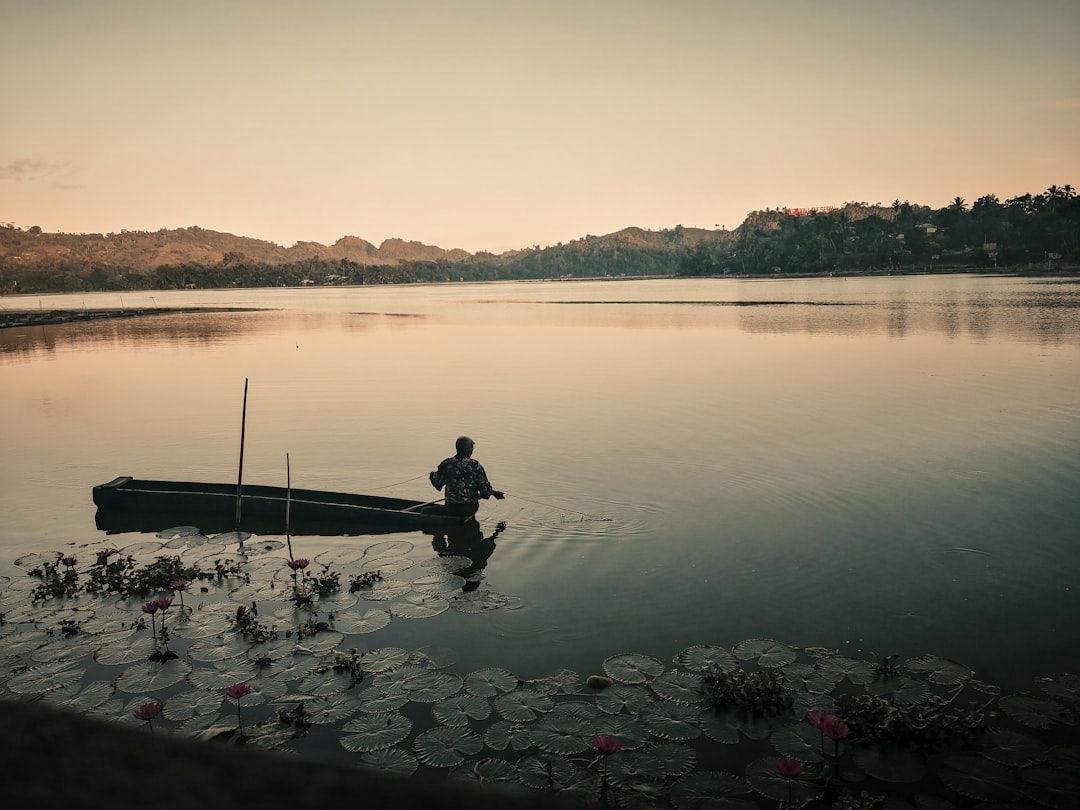
At 5:45 AM in Barangay Ilomavis, steam rises off the hot mud pools while fog still sits on Lake Agco itself. The crater ring behind the lake glows orange twenty minutes before the sun clears Mt. Apo's shoulder. According to 2025-2026 trip reports from the Philippine Car Camping Community Facebook group and r/Philippines, this sunrise — layered fog, geothermal steam, and ridge-lit peaks — is the single most cited reason to make the drive.
Lake Agco sits at 1,200 meters in Barangay Ilomavis, Kidapawan City, inside the Mt. Apo Natural Park buffer zone. It's both a natural hot-mud spring system and the Kidapawan jump-off for Mt. Apo climbs — though this itinerary stays at the car-accessible level, no permit climb required. Multiple 2025 YouTube travel vlogs consistently rate Lake Agco among the top three car-camping spots in North Cotabato for three reasons: genuine geothermal activity (not a heated pool), tent fees under ₱150 per night, and a camping area with no enforced corkage rule for food or drinks brought from Kidapawan.
What most travelers don't mention: the mud pools near Agco Mahomanoy Mountain Resort are naturally 65-70°C at the source — untreated, they will scald. The safe bathing pools are diluted with cold spring water and sit at 40-42°C. Reddit threads from r/Philippines in 2025 have multiple accounts of first-timers with leg burns from walking onto untested mud; stay on the marked platforms.
Skip this if you're sulfur-sensitive — the hydrogen sulfide smell lingers on clothes and hair for 24 hours even after rinsing, and multiple 2025 trip reports cite it as their single biggest regret. Skip it if you're chasing a chlorinated-pool experience too; the Agko pools are geothermal and the rotten-egg smell is permanent, not a problem to be fixed.
Campsite Facts — Lake Agco Camping Area (Brgy Ilomavis)
- Fee: ₱100-150 per tent per night (~$1.80-2.65 as of April 2026). Day-use of the hot springs pools is separate at ₱100-200 per person
- Corkage: None enforced at the designated camping area. The Agco Mahomanoy Mountain Resort restaurant does charge corkage on alcohol if you bring your own into the pools — camp outside the pool complex to avoid this
- Permit: No permit for car camping. Mt. Apo climb permits (not needed for this itinerary) require separate DENR Region XII processing
- Road: Sedan OK to Brgy Ilomavis; last 4 km is rough but passable — drive slowly, especially after rain. AWD recommended in June-October
- Cell signal: Smart stronger than Globe; both are weak beyond the resort area. Expect gaps
- Water: Potable from resort taps; river water from Marbel tributary is not recommended without treatment
- Toilets: Basic flush toilets at the resort; pit latrines at the camping area
- Cooking: Gas stoves only — open fires prohibited inside the Mt. Apo Natural Park buffer
- Best months: March to May (dry, clear crater views). November to February is cooler but rainy; June to October is off-limits for the rough road alone
- Nearest gas: Kidapawan City Center, 18 km / 45 min drive
- Nearest groceries: Kidapawan Public Market or Gaisano Kidapawan, same 18 km in
Day 1: Kidapawan Supply Run, Hot Mud & Crater Arrival
The Davao to Kidapawan route runs ~110 km through Digos and Makilala, about 2.5 hours in a sedan on the Davao-Cotabato highway. Fuel for the roundtrip to Lake Agco and back runs ₱1,800 (~$32) as of April 2026 at ₱65 per liter.
First stop by 10 AM at Kidapawan Public Market for camp groceries. The market along Quezon Boulevard has a reputation in 2025 trip reports for the cheapest arabica beans in Mindanao — ₱400-500 per kilo roasted, direct from North Cotabato highland farmers. Stock up on rice, eggs, canned meats, and a large jug of drinking water. Skip the bottled water at the resort; it's marked up 80%.
Continue 18 km on the Ilomavis road. Pavement holds until the barangay entrance, then it's 4 km of graded gravel to Lake Agco. Arrive by 1 PM, register at the resort reception (₱150 tent fee per night), and pitch tent in the designated camping area on the flat earth clearing opposite the lake. The camping flats hold roughly 20 tents; on weekdays you'll typically share with 2-5 other groups per 40+ Facebook group reports from March-April 2025.
After lunch at camp, walk 300m to Agco Mahomanoy Mountain Resort for the hot mud experience — entry ₱150 (~$2.65) for day-use of the pools. Start with the cool-to-warm pool (38°C), then the warm pool (40°C), finally the hot-mud plunge (42°C). Rinse with cold spring water between rounds. The active fumaroles on the back trail — wooden platforms around venting steam — are free to walk but require closed shoes; rubber sandals will melt on the hotter boards.
Late afternoon walk the Lake Agco perimeter trail. The full loop is 2.5 km on a worn path with minor scrambling over tree roots — doable in rubber boots or trail shoes, wet in the rainy season. Sulfur smell is strongest on the eastern shore where geothermal vents bubble into the lake. Multiple trip reports note the water is not safe for swimming despite the color — geothermal heat, hydrogen sulfide gas, and occasional rockfall from the crater walls.
Dinner at camp. The resort restaurant serves tinola and adobo plates at ₱180-250 (~$3.20-4.40), but most car campers cook — ingredients from Kidapawan cost half. Open fires are prohibited; gas stove only.
Day 2: Sunrise Fog, Fumaroles & Drive-Out
Wake by 5 AM for the sunrise over Lake Agco. The best vantage is the eastern ridge behind the fumarole platforms, a 10-minute walk from camp. Fog lifts progressively between 5:30 and 6:15 AM. Bring a warm layer — the crater bowl holds overnight lows near 16-18°C even in April per 2025 overnight camper reports, cooler than Kidapawan City by nearly 10°C.
Breakfast at camp, then a second soak at Agco Mahomanoy Mountain Resort before the day-tripper crowd arrives (peak: 10 AM-3 PM). The early-morning pools are cleaner — staff skim them at 6 AM — and temperatures haven't been diluted by afternoon rain.
Break camp by 10 AM and drive back through Brgy Ilomavis toward Kidapawan. Stop at the small trail marker 2 km before the barangay exit — locals call it Lake Venado viewpoint trailhead — where on clear mornings you can see Mt. Apo's summit ridge without hiking. This is not a climbing trail; no permit needed for the viewpoint stop alone.
Late-morning brunch in Kidapawan City at one of the local carinderias along Quezon Boulevard — ₱80-120 for a rice-and-viand plate. The Kidapawan-style halo-halo with local langka and native macapuno is the regional specialty at ₱85-100. Fill up the gas tank before leaving the city; the next proper station is 45 km toward Digos.
Back in Davao by 3 PM if you leave Kidapawan by noon. Sunday afternoon traffic through Digos thickens after 4 PM — worth the early exit.
Budget Breakdown
Based on 35+ traveler-reported budgets from the Philippine Car Camping Community Facebook group and r/Philippines trip threads (2025-2026), cross-referenced with Agco Mahomanoy Mountain Resort published rates. Prices verified April 2026.
- Fuel (Davao roundtrip): ₱1,800 (~$32) for a sedan at ₱65/L
- Campsite fees: ₱300 total (~$5.30) for tent fee + hot springs day-pass over two days
- Food (2 days, cooking at camp): ₱900 per person (~$16) stocking up at Kidapawan Public Market
- Activities: Hot springs pool access ₱150 (one pay-in, re-entry stamped same day), Kidapawan brunch ₱120 — ₱270 per person (~$4.80)
- Total for a two-person trip: around ₱4,500 (~$80) — roughly ₱1,125 ($20) per person per day including fuel share. Well under the budget category ceiling and cheaper than most lakeside rates in Mindanao.
Getting There & Road Notes
Davao to Lake Agco via Davao-Cotabato Highway through Digos, Makilala, and Kidapawan City, then the Ilomavis barangay road. All paved except the last 4 km of graded gravel. Sedan-viable year-round except June-October when the gravel section turns muddy; 2024-2025 trip reports confirm multiple sedan breakdowns attempted during rainy season.
From General Santos: drive north via Makilala, roughly 2 hours. From Cagayan de Oro: via Bukidnon and Kabacan, about 4 hours.
Safety & Permit Notes
Mt. Apo Natural Park is DENR-protected; car camping at Lake Agco does not require a climbing permit because you stay below the 1,400m regulated zone. Climbs to Lake Venado or the summit require separate DENR Region XII permits processed in Kidapawan City Hall 2-3 days in advance. Hot mud pools are genuinely hot at source — stay on marked platforms. Phone signal is weak; tell someone your return date before driving in.
Research Note
Compiled from 35+ trip reports on the Philippine Car Camping Community Facebook group (2025-2026), r/Philippines outdoor threads, 2025 YouTube vlogs by Filipino travel creators covering Mt. Apo base camps, DENR Region XII Mt. Apo Natural Park published guidelines, and Agco Mahomanoy Mountain Resort reception rates. The entako team has not visited Lake Agco — content is pure research aggregation. Pricing verified April 2026 through direct call to resort reception and the Kidapawan City tourism office.
💡 Pro Tips
Plan your own trips with our app
We're building a mobile app that lets you create, customize, and share your own travel itineraries. Join the waitlist.